Why Your Website Is Not Ranking on Google (And How to Fix It)

Sanyam Chhariya
SEO & Digital Marketing Specialist
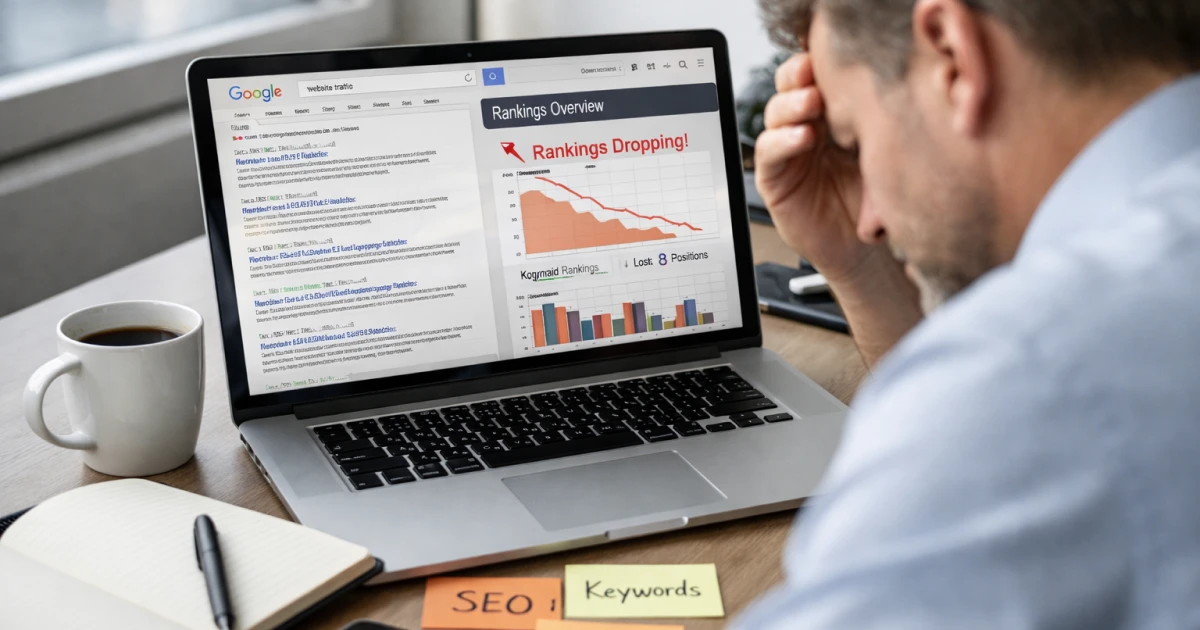
Discover the most common reasons why websites fail to rank on Google and learn practical SEO strategies to improve visibility, increase organic traffic, and grow your business.
Many businesses launch a website expecting it to automatically appear on Google. However, weeks or even months later, they realise their website is not ranking for important keywords.
This is one of the most common frustrations for business owners. A website may look modern and professional, but design alone does not guarantee visibility in search engines.
Google evaluates hundreds of ranking signals including content quality, technical performance, website authority, and user experience.
If your website is not appearing in search results, it usually means some important SEO foundations are missing.
This guide explains why your website is not ranking on Google and the practical steps you can take to improve your search visibility.
Why Google Rankings Matter for Businesses
Search engines are one of the largest sources of online traffic. Most users begin their journey by searching for a problem, product, or service.
If your website ranks higher in search results, your business can benefit from:
- Consistent organic traffic
- Higher brand visibility
- Increased trust and credibility
- More leads and enquiries
- Long-term marketing growth
On the other hand, websites that fail to rank often struggle to generate traffic or attract potential customers.
Important Insight
Search visibility is not only about traffic. Websites that rank higher are often perceived as more trustworthy and authoritative by potential customers.
How Google Decides Which Websites Rank
Before understanding why your website is not ranking, it helps to know how Google processes websites.
Search engines follow three main stages when analysing websites.
Crawling
Google uses automated bots to discover new and updated pages across the internet.
These bots follow links from one page to another to explore website content.
If your site has issues like broken links, blocked pages, or poor internal linking, search engines may struggle to crawl your website properly.
Indexing
After crawling a page, Google analyses its content and stores it in its database. This process is known as indexing.
During indexing, Google evaluates elements such as:
- Page content
- Headings and structure
- Keywords and context
- Images and media
- Internal links
If a page is not indexed, it cannot appear in search results.
Ranking
Once a page is indexed, Google decides where it should appear in search results based on hundreds of ranking signals.
Important ranking factors include:
- Content relevance
- Website authority
- Page speed
- Mobile friendliness
- User engagement
- Backlinks
Websites that provide helpful content and strong user experience tend to rank higher.
Common Reasons Your Website Is Not Ranking
Many websites fail to rank because of multiple SEO gaps, not just a single issue.
Below are some of the most common reasons businesses struggle with Google rankings.
1. Poor Keyword Targeting
Keyword research forms the foundation of SEO.
If your website targets the wrong keywords, Google may never match your content with the right audience.
Common mistakes include:
- Targeting extremely competitive keywords
- Ignoring long-tail search queries
- Creating pages without clear keyword focus
A strong keyword strategy ensures that your content aligns with what people are actually searching for.
2. Weak or Thin Content
Content is one of the most powerful ranking signals.
Websites with short, generic, or repetitive content often struggle to rank because they fail to provide enough value to users.
High-ranking content typically:
- Answers user questions clearly
- Provides detailed explanations
- Includes structured headings
- Offers actionable insights
Search engines prioritise helpful and informative content.
3. Slow Website Speed
Website speed directly affects both SEO and user experience.
If pages take too long to load, visitors often leave before the content appears.
Slow websites can lead to:
- Higher bounce rates
- Lower engagement
- Reduced search rankings
Optimising images, improving hosting, and reducing unnecessary scripts can significantly improve page speed.
4. Poor Mobile Experience
Mobile devices now account for the majority of internet traffic.
Google uses mobile-first indexing, meaning it evaluates the mobile version of your website first.
If your website is difficult to use on smartphones, rankings may suffer.
Common mobile issues include:
- Text that is too small
- Slow loading pages
- Poor navigation
- Elements that are hard to tap
5. Missing On-Page SEO
Even well-written content may fail to rank if it is not properly optimised.
Important on-page SEO elements include:
- Optimised title tags
- Clear meta descriptions
- Structured headings
- Internal links
- Descriptive image alt text
These signals help search engines understand what each page is about.
6. Lack of Backlinks
Backlinks remain one of the strongest ranking signals.
When other websites link to your content, search engines interpret it as a signal of trust.
Websites with few backlinks often struggle to compete with more established competitors.
Effective backlink strategies include:
- Guest blogging
- Industry collaborations
- Digital PR
- Creating shareable resources
Quality backlinks improve domain authority and ranking potential.
7. Technical SEO Problems
Technical issues can silently damage search performance.
Common problems include:
- Broken links
- Crawl errors
- Duplicate pages
- Missing XML sitemaps
- Incorrect robots.txt configuration
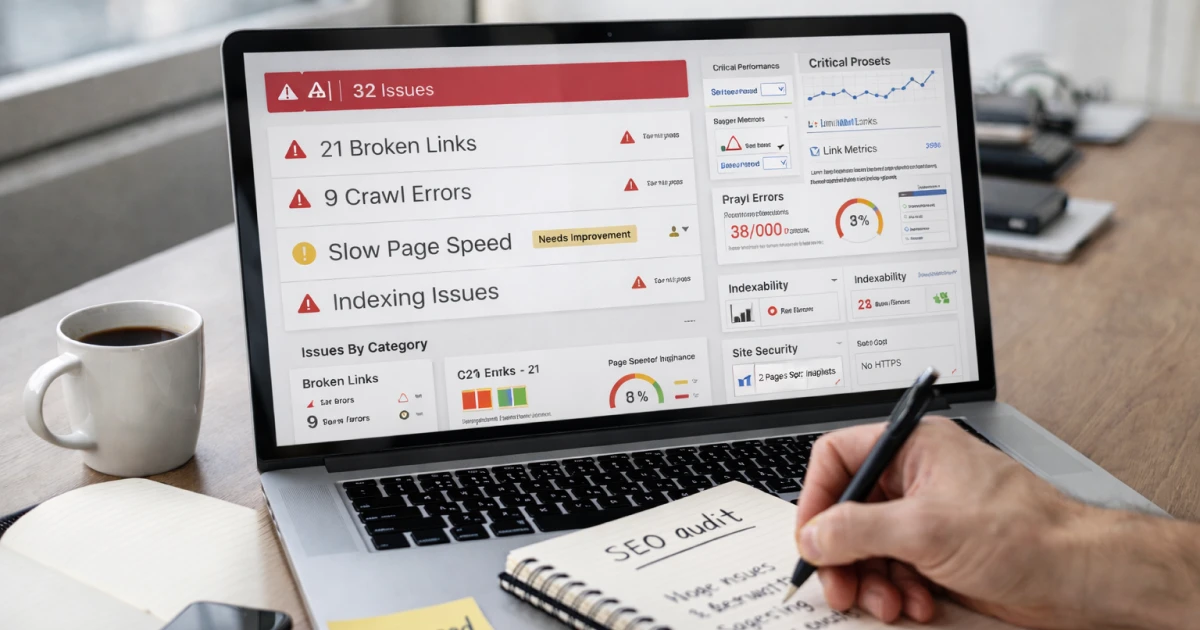
These issues can prevent search engines from properly crawling and indexing your content.
Pro Tip
Run regular technical SEO audits. Even small technical errors can prevent search engines from discovering or indexing important pages on your website.
How to Improve Your Website Rankings
If your website is not ranking on Google, the solution usually involves systematically improving your SEO foundation.
Below are practical steps to start improving search visibility.
Conduct an SEO Audit
An SEO audit identifies the technical and strategic issues affecting your website.
A proper audit should analyse:
- Website speed
- Technical errors
- Keyword opportunities
- Content gaps
- Backlink profile
- Competitor performance
Understanding these factors helps prioritise improvements.
Improve Your Content Strategy
Publishing valuable content consistently helps build authority over time.
Focus on creating:
- In-depth blog posts
- Educational guides
- Industry insights
- Case studies
- Frequently asked questions
Structured content helps search engines understand your expertise.
Build Topic Authority
Instead of publishing isolated blog posts, focus on topic clusters.
For example, a digital marketing agency could create content around topics such as:
- SEO strategy
- Website development
- Local search optimisation
- Lead generation strategies
This structure helps search engines understand your authority within a topic.
Build High Quality Backlinks
Backlinks remain essential for improving rankings.
Focus on earning links from reputable websites within your industry.
Quality backlinks strengthen your website’s credibility and help improve rankings.
Final Thoughts
If your website is not ranking on Google, the problem usually comes down to SEO fundamentals rather than design or technology.
Websites struggle to rank when they lack:
- Clear keyword targeting
- High-quality content
- Strong backlinks
- Technical optimisation
- Consistent SEO strategy
Improving these areas takes time, but the results can transform your online visibility.
A well-optimised website becomes a powerful digital asset that attracts traffic, builds authority, and generates business growth over time.
Struggling to Rank Your Website on Google?
Junixo helps businesses improve SEO performance with technical optimisation, content strategy, and authority building.
Get an SEO StrategySanyam is an SEO and Digital Marketing Specialist with nearly four years of experience improving search visibility, building backlinks, and driving organic growth for businesses.